
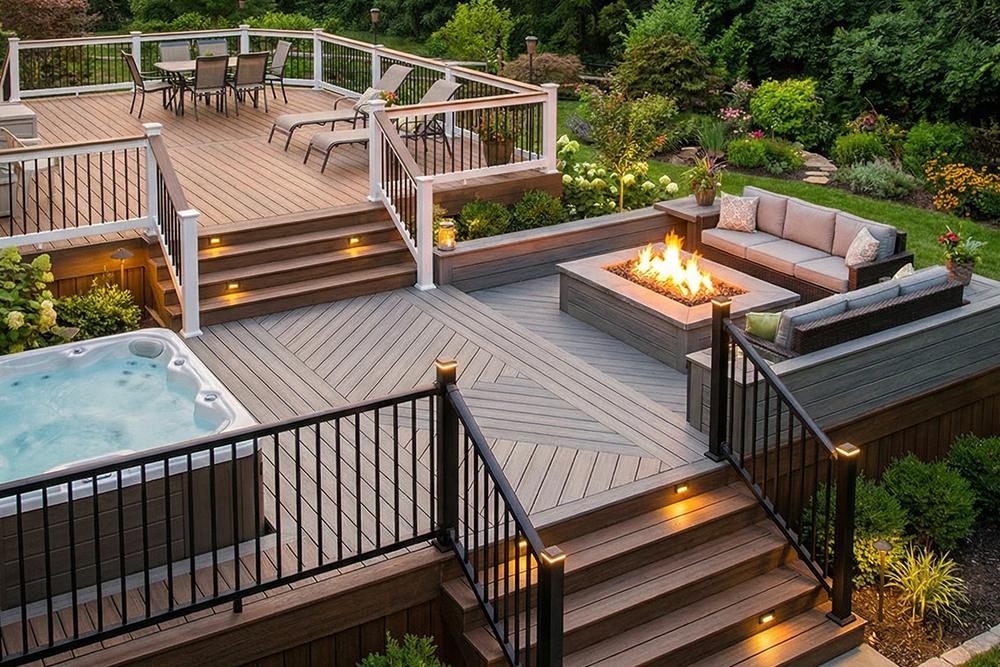
Homeowners and builders are increasingly choosing composite decking over traditional wood because of its long-lasting performance and low maintenance requirements. Outdoor spaces have become an integral part of modern homes, and decking plays a major role in enhancing both functionality and aesthetics. Composite decking has become a popular choice among the various decking materials available today.
You can choose the best material for your outdoor project by being aware of the different kinds of composite decking that are available on the market. Selecting the appropriate decking material guarantees durability, safety, and aesthetic appeal whether you’re building a patio expansion, backyard deck, swimming platform, or garden walkway.
This article will explore the different types of composite decking, the most common composite deck flooring options, and the major benefits of composite decking that make it a preferred choice for outdoor construction.
What is composite decking?
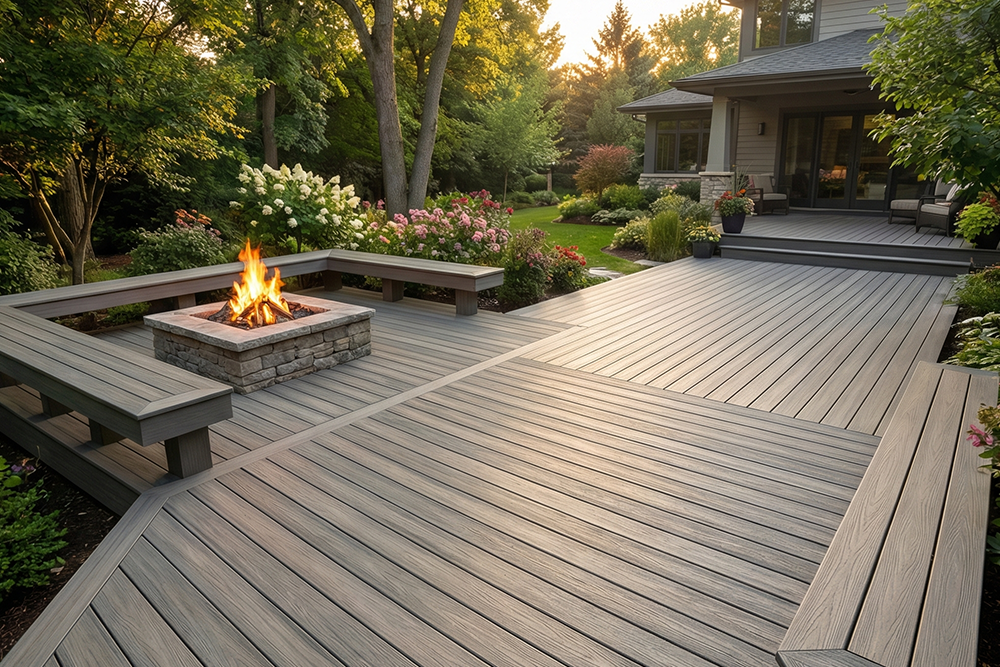
Composite decking is a combination of recycled plastic, wood fibers, and binding agents. Composite decking is a long-lasting, low maintenance, and environmentally responsible substitue for wood. It is more durable than conventional wood, usually lasting 20 to 30 years. It is perfect for severe weather because it doesn’t rot, warp, discolor, or fade. Conventional wood decks need regular upkeep, sealing, and staining. Composite boards, on the other hand, are made to endure outside environments with no maintenance. Many homeowners now use composite decking when creating outdoor living areas due to these benefits. Many types of composite decking with various constructions, finishes, and protective coatings are now produced by manufacturers. Before selecting the best material, it is crucial to comprehend the possibilities offered because each variety has distinctive advantages.Different Types of Composite Decking
When planning an outdoor deck, understanding the different types of composite decking can help you choose the best option based on budget, durability, and appearance.
Capped Composite Decking
Capped composite decking is one of the most advanced and widely used types of composite decking. It features a strong composite core surrounded by a protective outer layer made of polymer material.
This protective layer acts as a shield against moisture, stains, fading, and scratches. As a result, capped composite decking is highly durable and can maintain its appearance for many years.
Key features
- Strong protective coating
- Resistant to moisture and stains
- Long lifespan
- Minimal maintenance is required.
Because of its enhanced protection, capped board is considered one of the best composite deck flooring options for outdoor spaces exposed to heavy weather conditions.
Uncapped Composite Decking
Uncapped composite decking is an earlier generation of composite materials that does not include the additional protective outer shell. Instead, the composite mixture is exposed directly to the environment.
Although uncapped boards may require slightly more maintenance, they are still more durable than traditional wood decking.
Key features
- More affordable than capped boards
- Natural wood-like appearance
- Good durability for residential use
Among the composite decking types, uncapped boards are often chosen for projects where cost is a major factor but homeowners still want the benefits of composite materials.
Solid Composite Decking
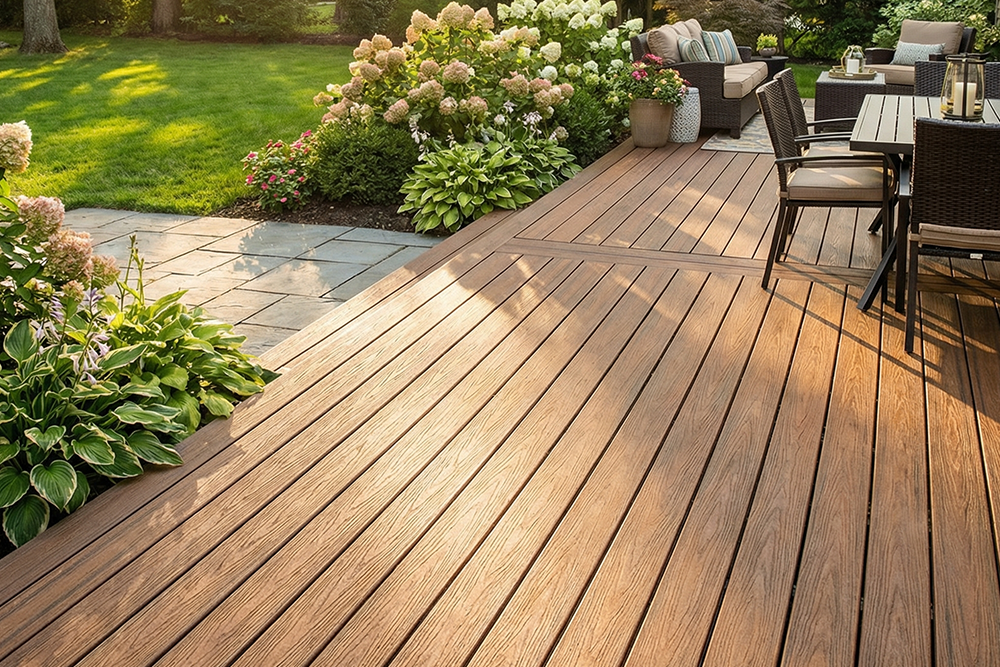
Solid composite decking boards are dense and heavy, offering excellent structural strength. These boards are completely solid throughout their structure, making them very durable.
Solid boards are commonly used in commercial spaces, public decks, or high-traffic outdoor areas.
Key features:
- High structural strength
- Suitable for heavy foot traffic
- Long-lasting and stable
When comparing types of composite decking, solid boards are often selected for projects that require maximum durability and long-term performance.
Hollow Composite Decking
Hollow composite boards contain internal gaps or chambers within the board structure. These cavities reduce the overall weight of the material, making the boards easier to transport and install.
Hollow decking boards are often more affordable and require less raw material during manufacturing.
Key features
- Lightweight design
- Lower installation cost
- Easy to handle and transport
Because of these advantages, hollow boards are popular composite deck flooring options for residential decks and patios where structural load is not extremely high.
3D Embossed Composite Decking
3D embossed composite decking is designed to replicate the natural texture and appearance of real wood. Advanced embossing techniques create realistic wood grain patterns on the surface of the boards.
This type of decking provides a premium look while maintaining the durability of composite materials.
Key features
- Realistic wood texture
- Slip-resistant surface
- Stylish and modern appearance
Among the different types of composite decking, this option is often chosen for luxury outdoor spaces where aesthetics are a top priority.
Co-Extruded Composite Decking
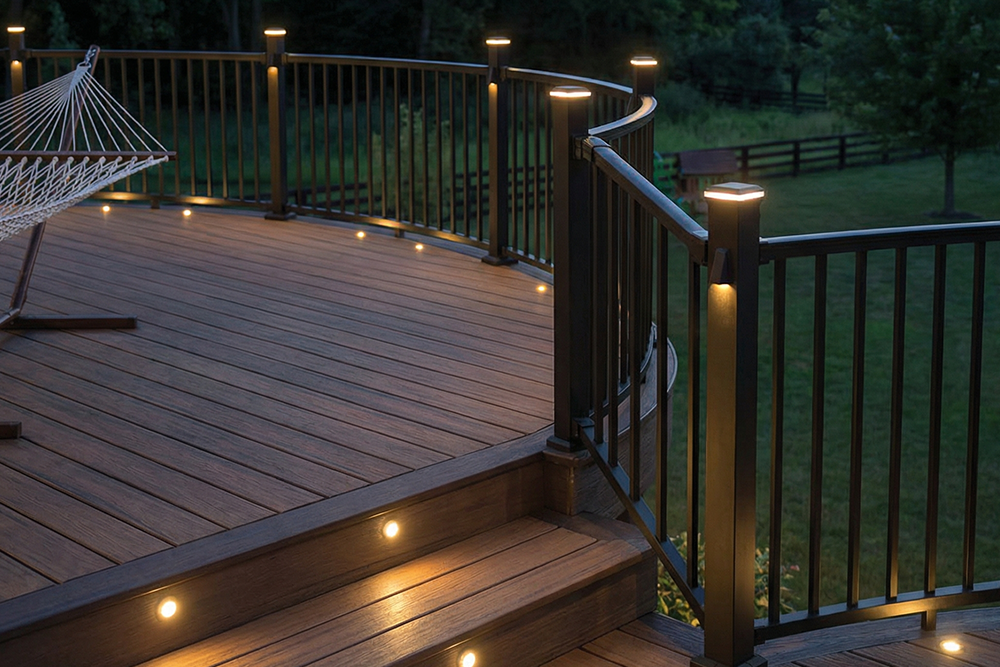
Co-extruded composite decking is an upgraded version of capped decking. During the manufacturing process, multiple layers of protective material are fused together with the composite core. This technology provides enhanced protection against UV rays, moisture, scratches, and stains.Key features
- Superior weather resistance
- Strong outer protection
- Excellent color stability
Popular Composite Deck Flooring Options
There are several composite deck flooring options available to suit different design styles and installation preferences. Choosing the right flooring option can significantly improve the appearance and functionality of your outdoor space.
Grooved Edge Deck Boards
Grooved edge boards are designed for hidden fastening systems. The grooves on the sides allow clips to secure the boards without visible screws.
This option creates a clean and seamless deck surface.
Square Edge Deck Boards
Square edge boards are installed using traditional screws that are visible on the deck surface. While they may not offer the seamless appearance of hidden fasteners, they are easy to install and widely available.
Textured Deck Boards
Textured composite boards include slip-resistant surfaces that improve safety, especially around pools or wet areas.
Wide Deck Boards
Wide boards create a modern and spacious appearance. They are commonly used in contemporary outdoor designs.
These composite deck flooring options allow homeowners to customize their decks according to their design preferences and functional requirements.
Benefits of Composite Decking
One of the main reasons homeowners prefer composite materials is the wide range of benefits of composite decking. Compared to traditional wood, composite boards offer better durability and convenience.
Low Maintenance
One of the biggest benefits of composite decking is that it requires very little maintenance. Unlike wood, composite boards do not need regular staining, sealing, or painting.
Occasional cleaning with water and mild soap is usually enough to maintain their appearance.
Long Lifespan
Composite decks are designed to last for decades. Many manufacturers offer warranties ranging from 20 to 30 years, making composite decking a reliable long-term investment.
Weather Resistance
Composite decking materials are resistant to moisture, rot, and insects. This makes them suitable for outdoor environments with varying weather conditions.
Eco-Friendly Material
Another important benefit of composite decking is its sustainability. Many composite boards are made from recycled plastic and reclaimed wood fibers, reducing environmental impact.
Aesthetic Variety
Modern composite decking types are available in a wide range of colors, textures, and finishes. Homeowners can choose designs that match their home’s architecture and outdoor decor.
How to Choose the Right Type of Composite Decking
Selecting the right decking material requires careful consideration of several factors.Budget
Some types of composite decking are more expensive than others. Capped and co-extruded boards usually cost more than uncapped options but offer greater durability.Climate
If you live in an area with heavy rain, extreme sunlight, or high humidity, choosing weather-resistant composite decking types is essential.Deck Usage
Decks used for large gatherings or commercial spaces may require stronger materials such as solid composite boards.Design Preference
Different composite deck flooring options offer unique visual styles. Consider the color, texture, and board width that best matches your outdoor design.
Installation and Maintenance Tips
Even though composite decking requires less maintenance than wood, proper installation and care can help maximize its lifespan.Budget
- Always follow manufacturer installation guidelines
- Ensure proper spacing between boards for expansion
- Clean the deck periodically to prevent dirt buildup
- Avoid dragging heavy furniture across the surface
Conclusion
Composite decking has become a leading choice for outdoor flooring because of its durability, style, and low maintenance requirements. With multiple types of composite decking available, homeowners can easily find a solution that fits their design preferences and budget.From capped and uncapped boards to solid, hollow, and embossed designs, the different types of composite decking offer flexibility for a wide range of outdoor projects. Additionally, the variety of composite deck flooring options allows homeowners to create customized decks that enhance both functionality and aesthetics. When you consider the many benefits of composite decking, including long lifespan, weather resistance, and minimal maintenance, it becomes clear why this material continues to grow in popularity.
By selecting the right composite decking types and installing them properly, you can create a beautiful and durable outdoor space that adds long-term value to your home. Designznews also helps homeowners achieve these results by offering professional design ideas, outdoor solutions, and practical guidance to create modern and functional spaces.